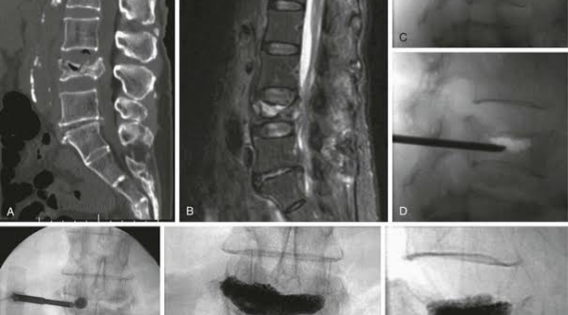
Elderly and elderly people often have weaker and more susceptible bones, which makes them more likely to fracture. Spinal compression fractures are a common cause of osteoporosis in older people. Such fractures can lead to an instant onset of back pain, loss of function and problems with daily activities. If these other conservative methods are not sufficient to ease the pain, minimally invasive procedures like vertebroplasty or kyphoplasty can be used.
Knowledge of the Vertebroplasty and Kyphoplasty recovery time is a vital factor to help patients and families prepare for treatment and recovery. Both procedures can be used to support fractured vertebrae and to alleviate pain, but the recovery may vary by patient, depending on age, bone health, overall medical condition, and the severity of the fractured vertebrae.
Vertebroplasty and kyphoplasty are minimally invasive procedures that are used to treat painful vertebral compression fractures. The fractures are typically associated with osteoporosis; however, spine involvement can also be due to injuries or medical conditions.
During vertebroplasty, a special bone cement is injected directly into the fractured vertebra. The cement fills the damaged bone and acts to help stabilize it, which may help to alleviate pain and improve mobility.
Kyphoplasty is similar, but instead, a small balloon is inflated inside the broken bone to make room for the cement. In certain patients, the balloon may assist in regaining some height to the vertebra and straightening the spine.
When considering the Spine Surgery options between Vertebroplasty and Kyphoplasty, these are some of the questions that are frequently discussed among elderly patients who suffer from Spinal Compression Fractures. Both are not necessarily preferable for all patients.
Vertebroplasty may be considered when the main objective is to help stabilize the broken vertebra to help manage pain. Vertebral height restoration or correction of some deformities may be considered a part of Kyphoplasty.
The Vertebroplasty Vs Kyphoplasty choice depends on fracture severity and vertebral height loss; kyphoplasty may offer better deformity correction, while vertebroplasty is often quicker with a shorter procedure time. Your spine neurosurgeon will recommend the best option for spinal health.
The Vertebroplasty and Kyphoplasty recovery time in the elderly is often shorter than recovery from traditional open spinal surgery. Depending on the patient's medical status and the recommendations of their healthcare providers, many patients can start moving around within a short time after the procedure.
For some of the older patients, there is some pain relief that they notice soon after the treatment. Some may require more time for the surrounding tissues and broken bones to "settle. Other age-related issues, such as osteoporosis, muscle weakness and balance problems, may also affect recovery.
Patients seeking spine fracture treatment Kolkata should seek the opinion of an experienced spine specialist for proper diagnosis. If your back pain persists after a fall or if it suddenly becomes very sharp and painful in an older person, don't overlook it.
With timely evaluation, it is possible to detect vertebral compression fractures and see if conservative treatment or a minimally invasive procedure might be suitable. Early treatment can also decrease extended time spent in bed, which can lead to muscle loss and other issues in older adults.
Treatment planning should be personalized for patients who are undergoing Osteoporotic spine fracture surgery India. Osteoporosis isn't limited to just the broken vertebra and can also lead to a greater chance of additional fractures.
Treatment of this condition, then, requires more than just pain relief. Advice on bone health, fall prevention, posture, mobility and long-term osteoporosis should also be given to patients.
Vertebroplasty and Kyphoplasty safety in the elderly relies on the careful selection of patients and thorough medical evaluation. As with all medical procedures, these treatments come with some risk and should be discussed with the treating specialist.
Before treatment, doctors will review heart and lung health, medicines, blood-thinning agents, risk of infection, and other medications. The patient needs to give the doctor all of his/her medical history and let their physician know about any medications being used.
These procedures can be performed with minimal invasiveness, but are not suitable for all types of spinal fractures. The specialist should decide if the fracture can be treated and if the benefits will be greater than the risks.
For certain elderly patients who have painful vertebral compression fractures, vertebroplasty and kyphoplasty may be an alternative minimally invasive treatment. It allows for recovery that is faster than the recovery process typical of traditional spinal surgeries, although there is a wide range of recovery periods.
Elderly patients may have a better idea of recovery time after Vertebroplasty and Kyphoplasty. Many older adults can continue to enjoy their lives and mobility following the treatment with proper medical evaluation, follow-up, and long-term osteoporosis care.
