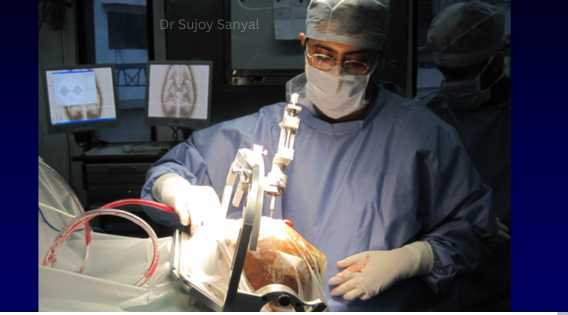
Deep Brain Stimulation (DBS) is a milestone achievement for many people living with Parkinsons’ — it's a shift from constantly battling the disease's impact on their lives to a life that has meaning. However, patients who are thinking about the surgery have one main question: What is life after surgery like? With many years of experience in movement disorder surgery, Dr Sujoy Sanyal is able to provide you with a clear roadmap of what to expect.
DBS uses thin electrodes inserted into certain parts of the brain that control movement and are connected to a small pulse generator, which is placed under the skin – sometimes referred to by patients as a brain pacemaker. The device delivers precise electrical signals that control abnormal brain signals that cause tremors, stiffness and slow movements. When drugs have become unpredictable in their efficacy over time, DBS may provide more predictable symptom control than drugs alone.
The first phase of recovery concentrates on recovery from the surgery. Patients usually have some tenderness of the scalp, mild swelling and fatigue after surgery. Most go home on the same day or the next day and are told not to do a lot of exercise, heavy lifting, or go swimming until the incision areas are completely healed.
It's important to understand that the stimulator isn't usually turned on immediately. Generally, surgeons will give the brain a brief recovery period before the first session of programming, allowing it to rest following the insertion of the electrodes.
It is said that the first few weeks after the initial activation are the most life-changing. The programming sessions, in which the neurologist turns up or down the stimulation levels, typically occur during multiple visits and allow the device to be fine-tuned for greater symptom control with minimal side effects such as tingling or changes in speech. Also, often, during this period, the dosage of some medications is decreased because the stimulation is what will lessen the need for high doses of the medication.
Throughout this process, patients are usually supported by a team known for providing successful DBS surgery in India, with standardisation of post-DBS surgery programming guidelines following international standards of care.
At 3-6 months, most patients report significant reduction in tremor, rigidity and improved independence in daily living. People often report that they regained some skills that they had lost over the years, like writing more legibly, walking more easily, or just not feeling tired from all the muscle tension.
However, DBS is not a cure. It helps control movements, but does not prevent the disease's progression, and some non-movement symptoms like mood changes or sleep problems might require additional treatment. It's important to have realistic expectations early on, as it is one of the most crucial factors in achieving long-term satisfaction with the treatment.
There are periodic check-ins needed for a battery-based device (for non-rechargeable devices); periodic check-ups because the disease changes and the Pacemaker must be reprogrammed; awareness of some medical procedures (such as MRIs) that require special precautions with the Pacemaker in place. More frequently used now, rechargeable systems decrease the need for replacement surgery, and are sometimes considered as a component of a brain pacemaker for Parkinsons' individualized treatment plan.
If you ask patients a few years after their surgery and what they think of the outcomes, you'll find a pattern: Life after DBS surgery is not about perfection; it's about regaining independence. Many come back to the hobbies they had quit, move more easily and have less brain power for the tremors throughout the day. Caregivers frequently also feel a reduced burden, because the changes in symptoms are more predictable and manageable.
The surgery is a technical procedure and the subsequent months of fine-tuning are crucial, so it's vital to pick an experienced team. Patients are advised to seek centres that have a history of success and have the best DBS surgeon India they trust to place the device and also for the months after surgery to program it — after surgery is successful, it is as much of the programming relationship that comes after that surgery that makes it successful.
DBS surgery is one of the greatest breakthroughs in Parkinsons’ treatment in the last 20 years. It has been bringing patients independence back who had become unable to control their symptoms with medicine alone. Though the road is a process of careful healing, patient programming, and continued follow-up, for many it will lead to a significant restoration of activities and routines that are important to them.
The best place to begin considering DBS for Parkinsons’ is a thorough evaluation by a movement disorder team experienced in the procedure.
